
Step 1 of 6
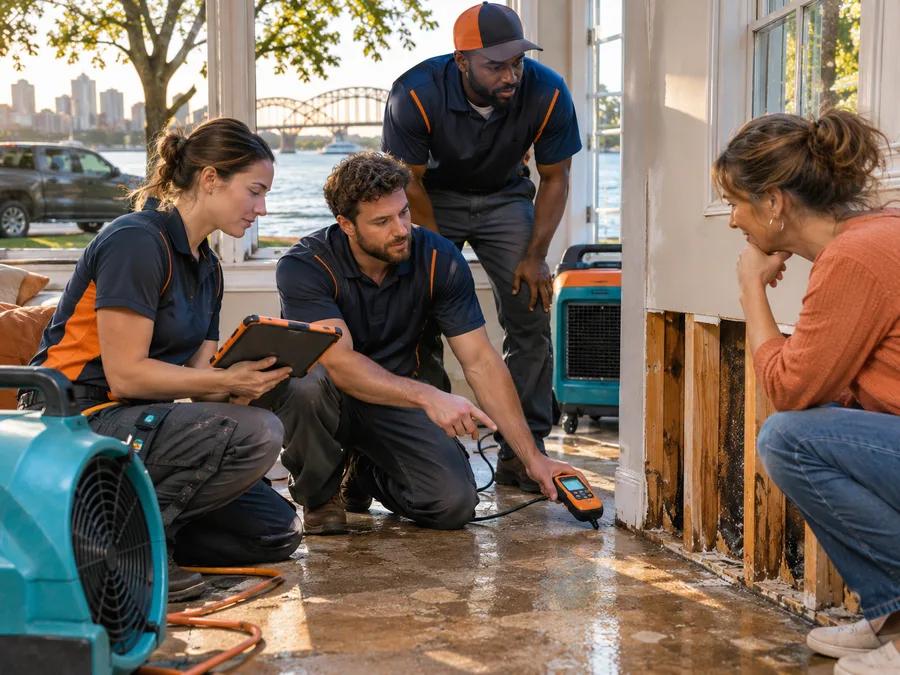
Walk the Damage
The technician walks the affected area with you and asks where the water came from.
Water, Mold and Fire
Need one local company for water, mold or fire damage? Get the damage measured and explained, with the price before work starts.

What They Handle
Water damage restoration companies handle the emergency side of a loss and, in many cases, the rebuild. A visit should start with finding the source, measuring how far the water traveled with a moisture meter, and explaining what can be dried and what has to come out.
Whether the job is water mitigation after a burst pipe or a full rebuild after a fire, the same order applies: stop the damage, dry and clean, then repair.
Services Covered
Pump-out, extraction and structural drying after leaks and overflows.
Pump-out, muck-out and sanitizing after storms and backups.
Removal of black water and contaminated materials, then disinfection.
Containment, removal of moldy materials and the moisture source fixed.
Board-up, soot and smoke cleanup and odor treatment.
Drywall, ceiling and flooring repair once the structure is dry.
Ask Before You Hire
Ask whether the work follows IICRC water damage standards, how drying will be measured, whether mitigation and repairs will be on separate estimates, whether they can work with your insurance company, and who pulls permits if rebuilding is needed.
The City of Cincinnati's consumer guide lists contractor registration or licensing as the first thing a contractor should show you before you pay anything. Any water restoration company or water damage contractor should be able to answer all of these without hesitating.

The First Visit
Step 1 of 6
The technician walks the affected area with you and asks where the water came from.
Step 2 of 6
Moisture readings and photos set the scope, and you should see them.
Step 3 of 6
A water damage specialist explains what can be dried and what has to come out.
Step 4 of 6
You get the mitigation estimate and, separately, the repair estimate.
Step 5 of 6
Work goes ahead once you approve it.
Step 6 of 6
A water remediation company that skips readings and starts tearing out walls should explain why.
Local Houses
Across Hamilton County, the median owner-occupied home was built in 1961, so many suburban houses have original drywall, finished basements and supply lines or water heaters that have been replaced at least once.
A visit to one of these homes should include checking the basement walls and the water heater area, even when the call is about something upstairs.
Repair or Replace
Most water losses are a mix. When a floor, cabinet run or ceiling is borderline, ask water damage experts for both numbers: what drying and refinishing would cost versus replacement.
Materials that touched sewage or floodwater are replaced; clean-water losses caught early leave more room to dry and keep. A water damage cleaning company that only quotes replacement should explain why drying won't work.
Comparing companies? Get the damage measured before work starts.
Call (937) 806-5725Hiring Questions
Typical water damage restoration in the area runs about $1,200 to $5,000, and typical mold remediation about $1,200 to $4,000. These are typical ranges, not quotes.
Yes. A water mitigation company handles extraction, drying and removal of damaged materials, and a general contractor rebuilds. Many water damage companies do both.
Generally no. You can choose your own contractor, though it's worth telling your adjuster before work starts.
A scope listing the affected areas and materials, moisture readings, the drying plan, and separate mitigation and repair estimates.
Yes. Service is available for homes and businesses throughout Cincinnati, Ohio. Call (937) 806-5725 to describe the damage.
Local Help
Describe what happened and get a local technician scheduled.