Mold Removal · Cincinnati, Ohio

Mold Removal In Cincinnati

Prompt assessment, careful containment, and thorough cleanup for homes and businesses affected by excess moisture.

Moisture assessment
Controlled containment
Homes and businesses
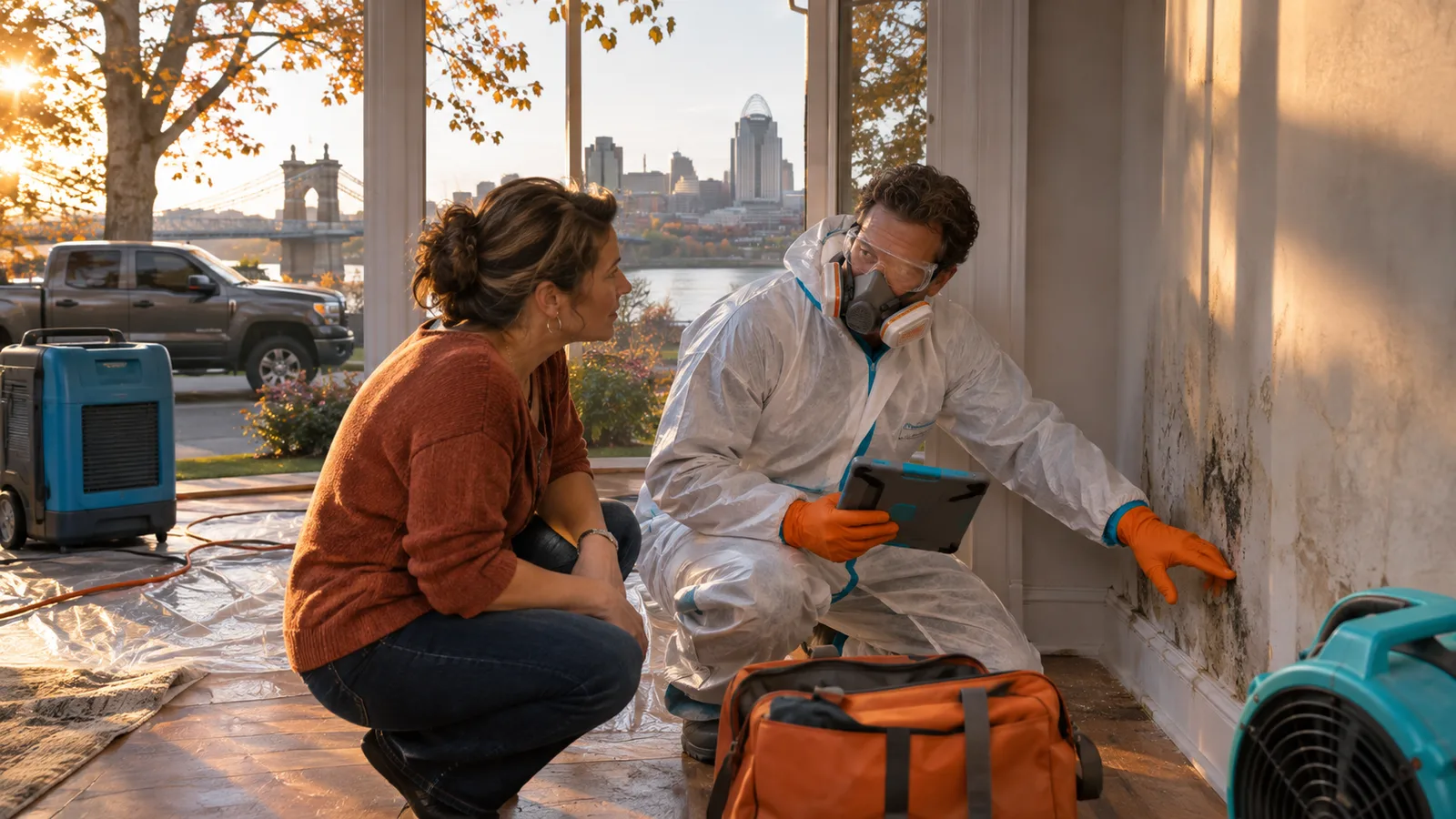
A trained mold removal technician in protective equipment inspecting a moisture-damaged wall in a Cincinnati home.

Assess the Cause and the Extent

A Clear Plan for a Mold Problem

Mold removal in Cincinnati should address visible growth, hidden moisture, and contaminated materials without spreading spores into unaffected rooms. Water Restoration Cincinnati begins by examining the affected area, tracing likely moisture sources, and defining the boundaries of the work. The resulting scope may include containment, air filtration, removal of unsalvageable porous materials, surface cleaning, and drying.

As an experienced water restoration team in Cincinnati, we explain what can be cleaned, what should be removed, and what moisture condition must be corrected before repairs begin. That distinction matters. Cleaning a stained surface without resolving the damp condition may leave the underlying problem in place.

Cincinnati properties face several common moisture pressures. Humid summers can slow drying in enclosed spaces, while plumbing failures, roof leaks, foundation seepage, and condensation can wet drywall, insulation, framing, carpet, or stored belongings. Older homes may also contain layers of plaster, wood lath, paneling, or previous finishes that make the extent of contamination harder to judge from the room alone.

Request Emergency Service

Know When to Investigate

Signs That Warrant a Professional Assessment

Visible spotting is one reason to request an assessment, but it is not the only one. Persistent musty odors, damp drywall, peeling finishes, recurring discoloration, or a room that remains humid after a leak may indicate moisture inside a wall, ceiling, cabinet, or floor assembly. Mold can also grow on the paper facing of drywall, wood, dust, carpet backing, and other materials that supply organic matter.

Professional attention is especially useful when growth covers more than a small, isolated surface, when contaminated material is porous, or when the source is hidden. It is also sensible after a sewage event or when occupants have health concerns. A qualified medical professional should answer questions about symptoms; the mold removal crew should focus on building conditions and safe work practices.

Neighborhoods with older housing, including Over-the-Rhine, Northside, and Clifton, may have plaster walls, aging supply lines, and past alterations that complicate access. In low-lying areas near the Ohio River, including portions of the East End, water entry and elevated indoor moisture deserve careful investigation. These conditions do not prove mold is present, but they affect where technicians inspect and how drying is planned.

Request Emergency Service
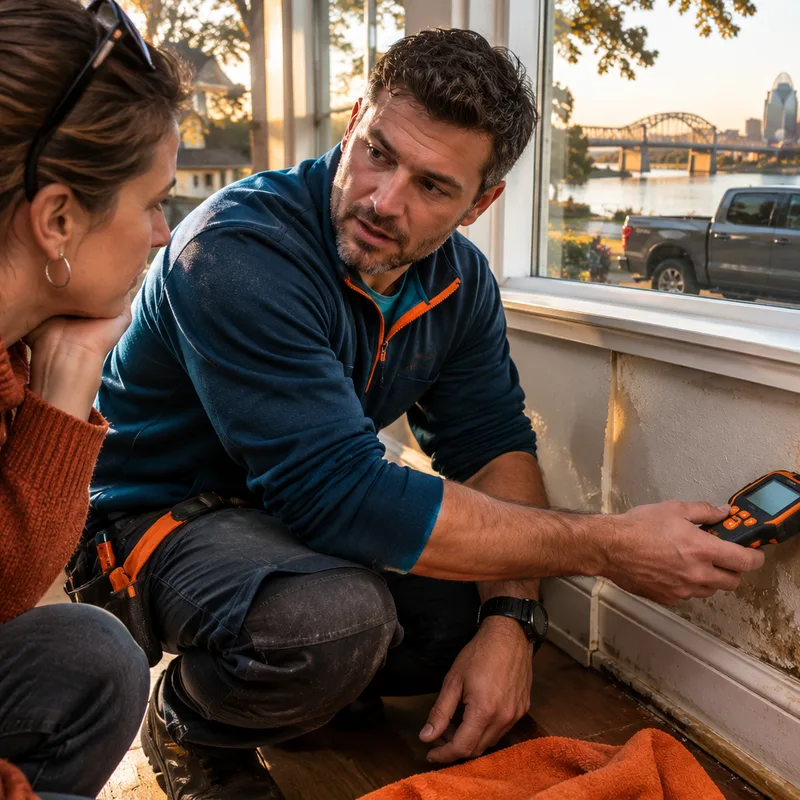
A close view of a technician using a moisture meter on drywall near a discolored baseboard, with the affected area clearly documented.

Scope Based on Actual Conditions

What Professional Mold Removal May Include

Moisture Investigation

Moisture meters, visual inspection, and targeted investigation help locate damp materials and identify the likely source. Infrared imaging may guide the inspection, but meter readings or direct examination are used to confirm moisture.

Controlled Containment

Polyethylene barriers and controlled access separate the work area from occupied spaces. When appropriate, negative air pressure helps keep airborne particles from moving beyond containment.

HEPA Air Filtration

HEPA-filtered air scrubbers capture fine airborne particles during removal and cleaning. Equipment placement and airflow are planned around the size and layout of the contained area.

Material Removal

Wet or contaminated porous materials such as drywall, insulation, and carpet padding may need removal. Cleanable structural materials are assessed individually rather than discarded automatically.

Detailed Cleaning

HEPA vacuuming and damp wiping remove settled dust and residue from appropriate surfaces. Antimicrobial products may be used where suitable, but chemicals do not replace physical removal.

Drying and Documentation

The affected assembly is dried to an appropriate condition before reconstruction. Photos, moisture readings, and a written work scope help clarify what was found and completed.

Request Emergency Service

From Inspection Through Recheck

Our Mold Removal Process

  1. 01

    Step 1 of 5

    Inspect the Affected Area

    We review the history of the leak or moisture concern, inspect visible conditions, and check accessible materials. The goal is to define the affected area and determine whether concealed investigation is justified.

  2. 02

    Step 2 of 5

    Stop the Moisture Source

    A plumbing leak, exterior opening, drainage issue, or condensation condition must be corrected. Mold removal can proceed while related repairs are coordinated, but the material cannot remain wet.

  3. 03

    Step 3 of 5

    Build Containment

    The work zone is isolated before disturbed materials are removed. Floor protection, sealed barriers, controlled entry, and HEPA-filtered equipment are selected for the actual scope.

  4. 04

    Step 4 of 5

    Remove and Clean

    Unsalvageable material is carefully removed and bagged within containment. Remaining surfaces are cleaned using methods suited to the material, with attention to cavities, framing, and settled dust.

  5. 05

    Step 5 of 5

    Dry and Recheck

    Drying equipment is used when needed, and material moisture is checked before the work is considered ready for repair. Larger or sensitive projects may also involve an independent indoor environmental professional for testing or clearance.

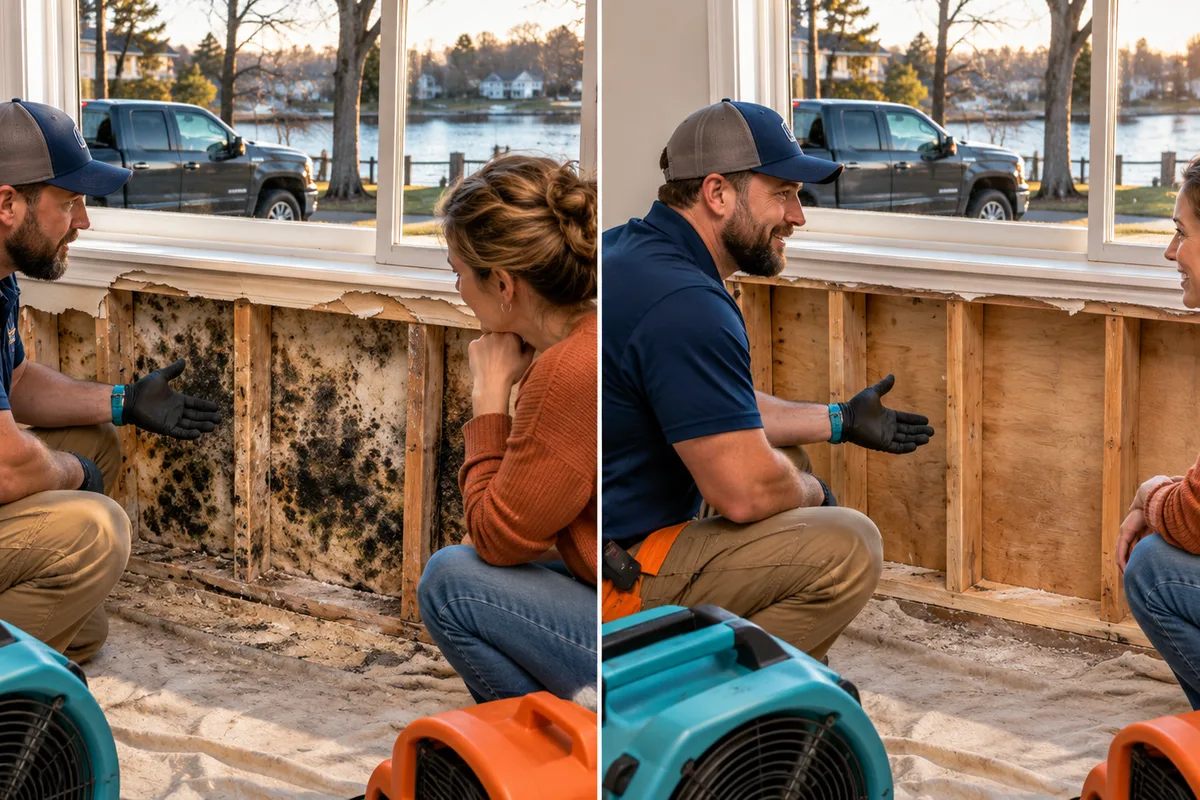
A side-by-side view of a mold-affected wall cavity before removal and the same cavity after contaminated drywall is removed and the framing is cleaned.

Remove the Source, Not Just the Stain

Mold Removal in Cincinnati Is More Than Surface Treatment

Painting over discoloration, spraying bleach on drywall, or placing a fan in the room does not establish that contamination has been removed. Bleach can discolor growth, but porous materials may remain contaminated beneath the surface. Uncontrolled demolition is another concern because cutting or tearing material can release dust and spores into adjacent rooms.

A sound scope distinguishes source removal from stain treatment. It also accounts for the material involved. Finished wood, metal, and some masonry surfaces may be cleaned when they remain structurally sound. Mold-affected drywall, ceiling tile, insulation, and similar porous products often cannot be cleaned reliably and may require disposal.

Containment should match the conditions rather than follow a one-size-fits-all setup. A small isolated area may need limited controls, while widespread or concealed growth may require a larger work zone, negative air pressure, and staged removal. If laboratory analysis or independent post-remediation verification is appropriate, sampling should be performed by a qualified professional whose role is separate from the cleanup work.

Request Emergency Service

Planning the Scope

How Much Does Mold Removal Cost in Cincinnati?

Professional mold removal in Cincinnati typically costs about $500 to $6,000, while extensive contamination across multiple rooms or concealed assemblies can cost more. A small, accessible area generally falls near the lower end; containment, demolition, and detailed cleaning increase the price.

Final cost depends on affected square footage, material type, access, containment needs, moisture-source repairs, drying time, disposal, and whether independent testing is requested. Estimates should separate remediation from reconstruction so the scope is clear. The exact cost is confirmed after an on-site inspection.

Request Emergency Service

Prepare for a Useful Assessment

What to Expect Before Work Begins

A useful proposal identifies the affected rooms, materials expected to be removed, surfaces to be cleaned, containment approach, equipment plan, and conditions for completion. Ask whether repairs to drywall, trim, flooring, or paint are included. Remediation and reconstruction are separate phases, even when they are coordinated closely.

Prepare for the visit by noting when the odor or discoloration began, where water entered, and whether the issue has returned after prior cleaning. Avoid disturbing suspected growth. Move unaffected valuables only if they can be reached without passing through contamination, and leave questionable items for the technician to assess.

Water Restoration Cincinnati keeps the conversation practical. You should understand what is known, what remains concealed, and what could change the scope once an assembly is opened. That gives you a better basis for approving work and planning repairs.

Request Emergency Service

Address suspected mold before damp materials deteriorate further. Arrange an assessment to define the affected area, identify the moisture concern, and receive a clear scope for cleanup.

Request Emergency Service

Practical Answers

Mold Removal Questions from Cincinnati Property Owners

How quickly can mold removal begin after water damage?

Assessment should occur promptly once the water source is controlled and the area is safe to enter. The work schedule depends on access, the size of the affected area, containment needs, and whether materials are still wet. Cincinnati's humid summer conditions can slow natural drying, so mechanical dehumidification and air movement may be needed before reconstruction.

Do I need mold testing before removal?

Testing is not always required when visible growth and a moisture source are already present. Sampling may be useful when the source is unclear, contamination is disputed, occupants have specific medical concerns, or an independent clearance decision is needed. Testing should answer a defined question rather than serve as a substitute for inspecting the building.

How long does mold remediation usually take?

A contained, accessible project may take several days, while widespread or concealed contamination can take longer. Demolition, detailed cleaning, drying, and any independent verification each affect the schedule. Plaster assemblies and layered finishes in older Cincinnati homes can require extra time because the crew may need to open materials carefully and inspect hidden cavities.

Can I remain in my home during mold removal?

Some occupants can remain in unaffected areas during a limited, well-contained project, but the decision depends on the location and extent of work. Shared heating and cooling pathways, access through occupied rooms, vulnerable occupants, and the type of contamination all matter. The work plan should state how the area will be isolated and whether temporary relocation is advisable.

Will homeowners insurance pay for mold removal?

Coverage often depends on the cause of the moisture and the terms, limits, and exclusions in the policy. Mold tied to a sudden covered water loss may be treated differently from long-term seepage, deferred maintenance, or chronic humidity. Document the source, affected materials, photos, and emergency steps, then ask the insurer for a coverage decision based on the specific loss.

Can mold be removed without tearing out walls?

Wall removal is not always necessary, but it may be required when porous material is contaminated or growth is present inside the cavity. Moisture readings, inspection openings, and direct observation help determine the scope. Cleaning the painted face alone is not adequate when the drywall paper, insulation, or concealed framing remains affected.

What prevents mold from returning after cleanup?

Correcting the moisture source and drying the assembly are the main preventive steps. That may involve plumbing repair, exterior maintenance, drainage correction, ventilation changes, or humidity control, depending on the cause. Clean materials should not be enclosed until moisture readings show they are ready for repair.

Start With an Assessment

Get a Clear Mold Removal Plan

Tell Water Restoration Cincinnati what you have noticed and where the moisture occurred. We will assess the conditions, explain the appropriate controls, and outline the next steps for a cleaner, drier property.