Water Damage Restoration · Cincinnati, Ohio

Water Damage Restoration Cincinnati OH

Fast extraction, controlled drying, careful cleanup, and repair planning for leaks, overflows, and storm-related water damage.

Fast water extraction
Moisture mapping
Cleanup and repair planning
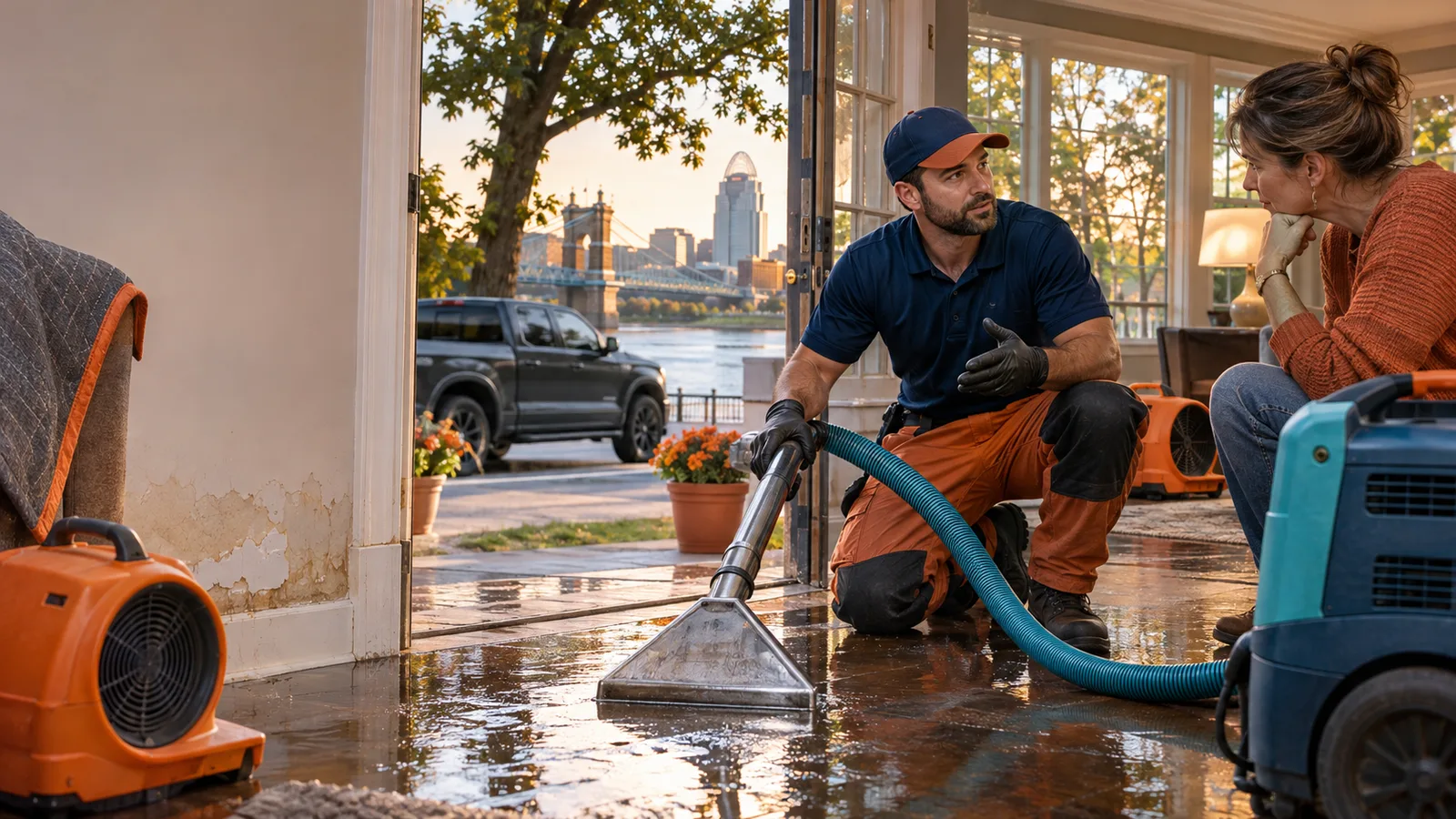
A water damage technician using professional extraction equipment in a Cincinnati home with visible floor-level water intrusion.

Stop the Spread

Act Quickly When Water Enters Your Property

Water damage restoration Cincinnati OH property owners can rely on starts with one priority: stopping the spread. Water can move beneath flooring, soak drywall, enter wall cavities, and reach rooms that look dry at first glance. Fast extraction and moisture mapping reduce avoidable damage and give the structure a better chance to dry properly.

Water Restoration Cincinnati handles the work as Cincinnati's local water restoration service, with the response organized around the source, water category, affected materials, and moisture readings. The job may involve standing-water removal, removal of damaged porous materials, dehumidification, air movement, cleaning, odor control, and repairs. Each step depends on what the inspection finds rather than a standard equipment package.

Cincinnati's mix of older housing, finished basements, hillside properties, and seasonal heavy rain creates several paths for water intrusion. In older neighborhoods such as Clifton and Northside, plaster, wood trim, masonry foundations, and concealed cavities can complicate drying. Properties near the Ohio River and low-lying drainage areas may face added concerns after intense rain, while homes in Hyde Park often contain finished spaces where flooring and built-ins need prompt protection.

Request Emergency Service

Inspect Beyond the Visible Water

Professional Cincinnati Water Damage Restoration

A proper restoration begins with finding the water source and defining the affected area. Visible puddles show only part of the loss. Technicians use moisture meters, thermal imaging when conditions support it, and direct inspection to check drywall, subfloors, baseboards, insulation, cabinetry, and structural wood.

The water category also changes the cleanup plan. Category 1 water begins from a sanitary source, such as a broken supply line. Category 2 water contains enough contamination to require additional precautions. Category 3 water is grossly contaminated and may include sewage or outdoor floodwater. Water can become more hazardous after contacting dirty materials, so the source and conditions matter as much as the depth.

Restoration decisions are material-specific. Clean water caught early may allow some carpet, wood framing, or drywall to be dried in place. Saturated insulation, swollen composite materials, contaminated carpet pad, and unsalvageable drywall often require removal. The goal is to preserve sound materials without trapping moisture inside the building assembly.

Request Emergency Service
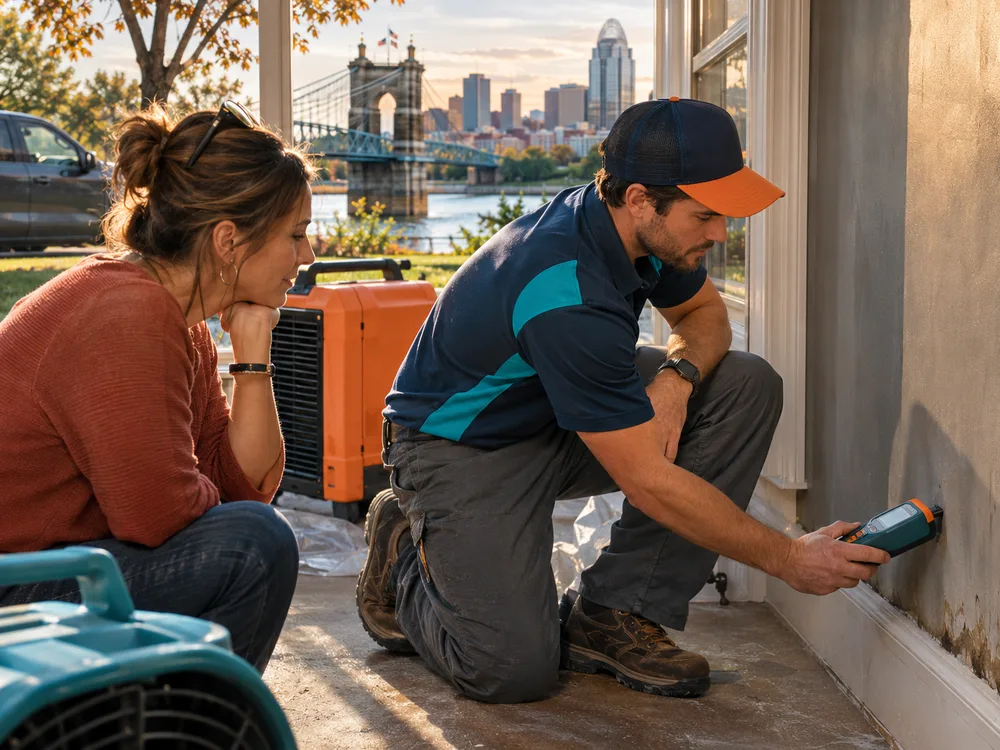
A restoration technician checking drywall and baseboard moisture levels with a professional moisture meter inside a Cincinnati residence.

A Scope Matched to the Loss

Water Losses We Restore

Plumbing Leaks and Burst Lines

Supply-line failures, leaking fixtures, and pipe breaks can release water behind walls or across several rooms. The response includes source confirmation, extraction, moisture checks, and a drying plan.

Basement Water Intrusion

Finished and unfinished basements can be affected by surface water, foundation entry, sump problems, or plumbing failures. Cleanup depends on the source and contamination level.

Appliance and Fixture Overflows

Water heaters, washing machines, dishwashers, toilets, tubs, and sinks can damage flooring, cabinets, ceilings, and rooms on lower levels.

Storm and Roof-Related Water

Wind-driven rain and roof openings may soak insulation, ceilings, and wall cavities. Temporary source control must be coordinated with interior extraction and drying.

Commercial Water Damage

Offices, retail spaces, rental properties, and other commercial buildings need a plan that addresses safety, affected contents, drying zones, and disruption to normal use.

Sewage and Contaminated Water

Contaminated losses require protective measures, controlled removal of affected porous materials, cleaning, and disposal practices suited to the exposure.

Request Emergency Service

From Source Control to Verification

Our Water Damage Restoration Process

  1. 01

    Step 1 of 6

    Inspect and Control the Source

    The first assessment identifies the apparent source, visible damage, safety concerns, and water category. Active plumbing, electrical, or structural hazards must be addressed before normal restoration work proceeds.

  2. 02

    Step 2 of 6

    Map the Moisture

    Moisture readings establish how far water traveled and which materials are affected. This creates a baseline for equipment placement and later drying checks.

  3. 03

    Step 3 of 6

    Extract Standing Water

    Portable or truck-mounted extraction equipment removes bulk water. Thorough extraction shortens the drying stage because less liquid remains in carpet, flooring, and other materials.

  4. 04

    Step 4 of 6

    Remove Materials That Cannot Be Saved

    Contaminated or badly damaged porous materials may be removed to expose wet cavities and prevent unsound finishes from being left in place.

  5. 05

    Step 5 of 6

    Dry and Dehumidify

    Air movers promote evaporation while commercial dehumidifiers collect moisture from the air. Equipment is positioned for the affected materials and adjusted as conditions change.

  6. 06

    Step 6 of 6

    Clean, Verify, and Plan Repairs

    Affected surfaces are cleaned according to the loss conditions. Final moisture readings are compared with appropriate dry standards before repair work is planned.

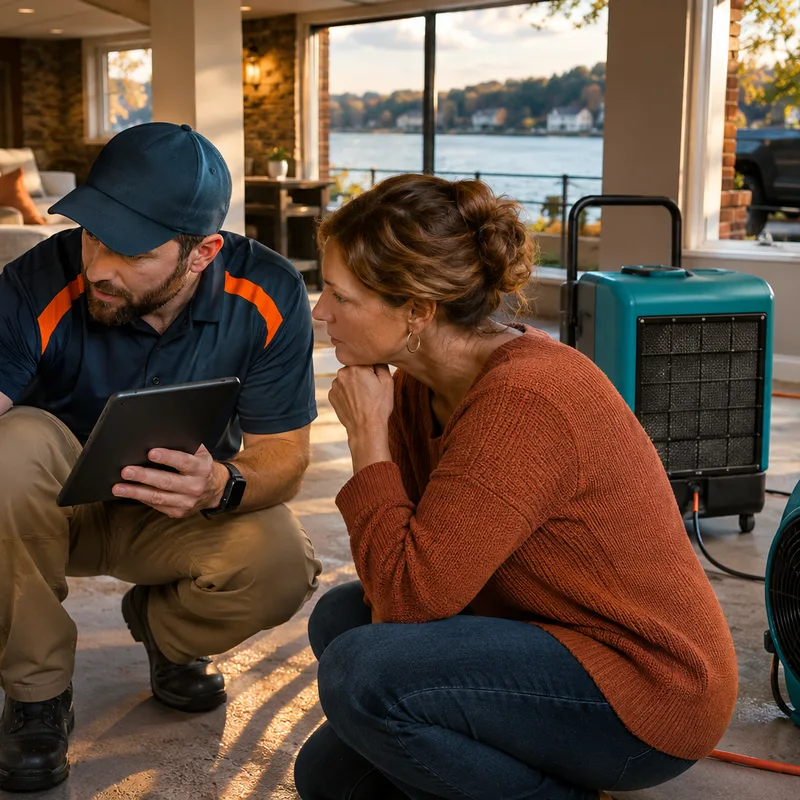
Commercial air movers and a dehumidifier arranged in a finished basement, with a technician documenting humidity and material readings.

Measure Conditions, Then Adjust

Drying Cincinnati Homes Without Creating More Damage

Drying is controlled work, not simply placing fans in a wet room. Airflow, temperature, humidity, and the permeability of each material affect the result. Commercial dehumidifiers lower vapor pressure in the drying area, while air movers help moisture leave wet surfaces. Closed drying chambers may be used to concentrate equipment on the affected space.

Basements require special attention because concrete and masonry can hold moisture, and finished walls may conceal wet insulation or wood framing. In Mount Adams and other hillside areas, water can follow grade and enter lower levels through vulnerable joints or openings. In Oakley and Hyde Park, finished basements and layered floor assemblies can hide moisture beneath vinyl plank, laminate, carpet, or engineered wood.

Cincinnati's humid summers can slow natural evaporation. Cold weather creates a different concern when frozen plumbing releases water after thawing. Indoor conditions must be measured rather than judged by touch. Daily or scheduled monitoring helps confirm whether materials are responding and whether equipment needs to be repositioned.

Request Emergency Service

From Emergency Work to Reconstruction

Cleanup, Documentation, and Repair Planning

Water damage restoration does not end when standing water is gone. A complete scope accounts for the materials that were wet, what was removed, how the remaining structure was dried, and what must be rebuilt. Photos, moisture records, equipment logs, and an itemized scope can help property owners understand the work and communicate with an insurance carrier.

Coverage depends on the policy and the cause of loss. Sudden plumbing failures are often treated differently from groundwater, repeated seepage, deferred maintenance, or flooding from outside the building. Property owners should report the loss promptly, protect the property from further damage when safe, and keep records of emergency work. The insurer determines coverage; the restoration contractor documents observed conditions and completed work.

Repair planning may include drywall replacement, insulation, trim, flooring, paint, or cabinet components. The extent is based on actual damage and access needs. Repairs should begin only after affected assemblies have reached suitable moisture conditions, since closing a damp wall or floor can cause later problems.

Request Emergency Service

Understand the Scope

How Much Does Water Damage Restoration Cost in Cincinnati?

Water damage restoration in Cincinnati typically costs about $1,200 to $5,000 for a limited clean-water loss, while extensive, contaminated, or multi-room work can exceed $10,000. Emergency extraction and basic drying may fall near the lower end; demolition, contents handling, specialty drying, and reconstruction increase the total.

Final price depends on water category, affected square footage, material saturation, access, equipment days, disposal, and repairs. Insurance coverage varies by cause and policy. The exact cost is confirmed after an on-site inspection and written scope.

Request Emergency Service

Early extraction and moisture testing can limit how far a water loss spreads. Describe what happened, where the water traveled, and whether the source has been stopped so the response can be planned.

Request Emergency Service

Practical Answers

Cincinnati OH Water Damage Restoration FAQs

How quickly should water damage restoration begin?

Water damage restoration should begin as soon as the area is safe and the source can be controlled. Water can move under flooring and into wall cavities within a short time, while Cincinnati's summer humidity may slow evaporation. Prompt extraction and moisture mapping help define the loss before finishes hide continuing damage.

How long does water damage restoration take in Cincinnati?

Structural drying often takes several days, but the complete restoration can take longer when demolition, specialty drying, or repairs are required. Material type, saturation, weather, indoor humidity, and access all affect the schedule. Moisture readings, rather than a fixed number of days, determine when drying is complete.

Can wet drywall and flooring be saved?

Some wet drywall and flooring can be saved when the water is sanitary, damage is limited, and drying starts promptly. Contaminated materials, swollen composite flooring, wet insulation, and drywall that has lost strength may need removal. A moisture inspection is needed because finished floors can conceal water in the underlayment or subfloor.

Does homeowners insurance cover Cincinnati water damage restoration?

Homeowners insurance may cover sudden and accidental water damage, but coverage depends on the policy and cause. A burst supply line is usually evaluated differently from long-term seepage or water entering from outside. Cincinnati property owners should document the conditions and ask their carrier to confirm coverage and claim requirements.

Is basement floodwater safe to clean without professional equipment?

Basement water should be treated cautiously until its source and contamination level are known. Outdoor floodwater and sewage are Category 3 losses and can carry harmful contaminants. Electrical hazards, slippery surfaces, hidden openings, and saturated porous materials add risk, particularly in finished basements.

Will you remove everything that got wet?

Removal is based on contamination, material condition, and whether an item can be dried safely. Sound framing may remain after cleaning and controlled drying, while contaminated carpet pad, saturated insulation, or badly swollen particleboard often cannot be restored. The scope should distinguish salvageable materials from those that require removal.

What should I do before the restoration team arrives?

Stop the source only if it is safe, avoid standing water near electrical equipment, and keep people and pets away from contaminated areas. Do not use a household vacuum to collect water. Note when the loss began, take photos from a safe location, and gather available insurance information.

Start With the Affected Areas

Get a Clear Plan for Your Water Damage

Tell Water Restoration Cincinnati what happened and which areas are affected. We will help establish the next steps for inspection, extraction, drying, cleanup, and repair planning.