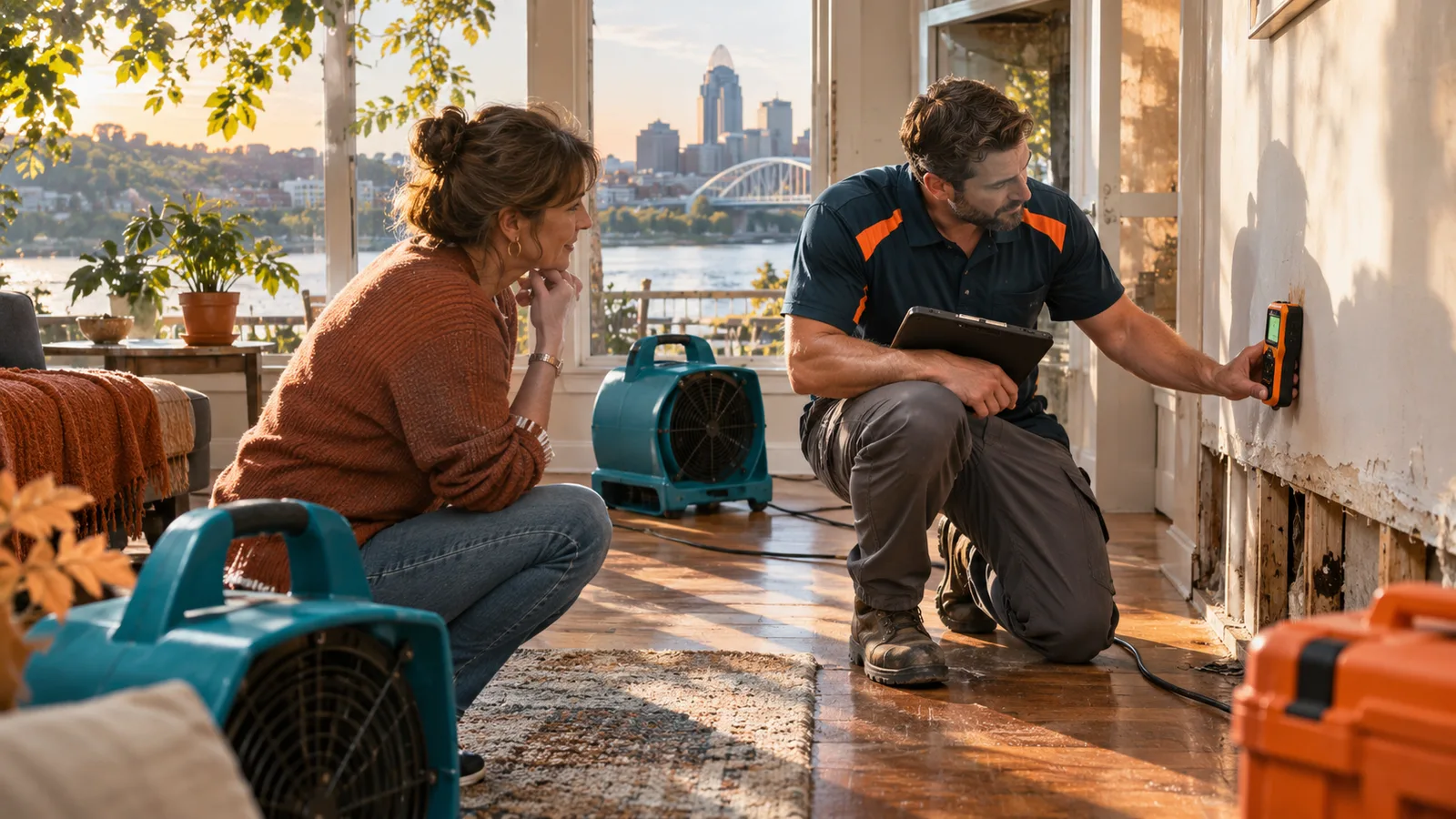
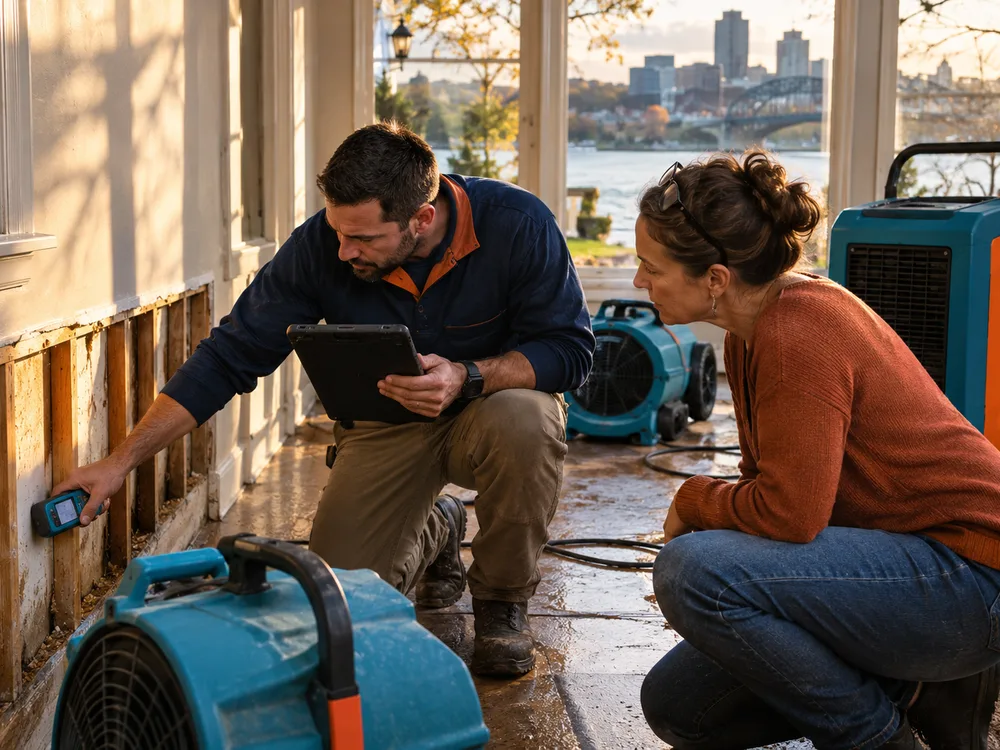
Many building materials can be restored when the water is relatively clean, exposure is limited, and drying begins soon enough. Solid wood, some hardwood flooring, framing, masonry, and intact nonporous surfaces may respond well to controlled drying. Results depend on finish type, assembly, moisture level, and whether water is trapped beneath or behind the material.
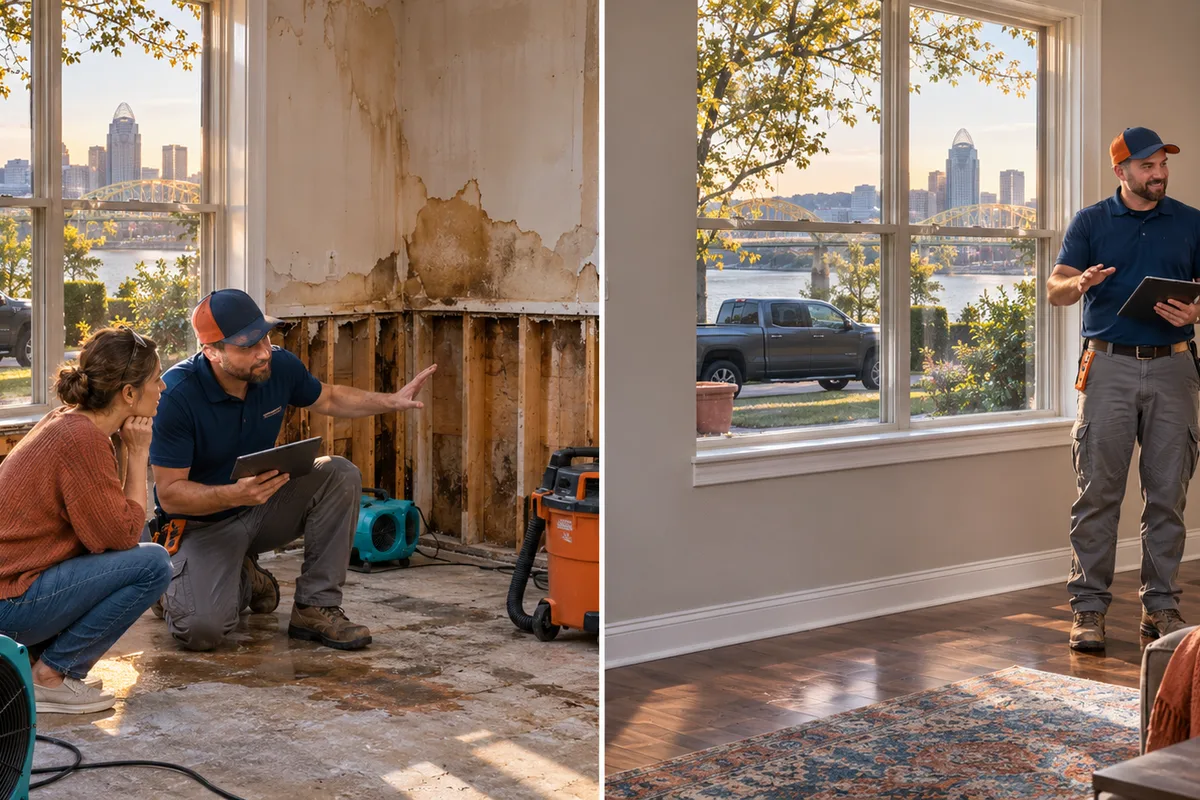
Drywall may sometimes be dried in place when it is structurally sound and has not contacted contaminated water. Wet insulation, delaminated engineered wood, swollen particleboard, and heavily contaminated carpet pad are less likely to be salvageable. Plaster in Cincinnati's older housing stock requires individual evaluation because its thickness, wood lath, and wall cavities can slow drying.
The decision should be based on material condition, contamination, replacement access, and documented drying progress. Removing everything can create needless repair costs, while keeping compromised material can lead to odors, deterioration, or microbial growth. A written scope should state what will be dried, cleaned, removed, and repaired.